 BabyTides™
Join the waitlist
After birth · Recovery
When can I exercise after giving birth?
Moving again after birth can help your recovery, your energy and your mood. After an uncomplicated vaginal birth, gentle activity can often start within days. After a cesarean or a complicated birth, it usually takes longer. Either way, build up gradually. [1] [2]
Quick answers
When can I start exercising after a vaginal birth?
ACOG says that if you had a healthy pregnancy and an uncomplicated vaginal birth, you can usually start exercising again a few days after the birth, or as soon as you feel ready. [1]
What about after a C-section?
Talk to your provider first. The NHS says exercise may need to wait about 6 weeks after a cesarean, and should start only when you feel able. [1] [3]
When can I run or do high-impact exercise?
The NHS suggests waiting until after your 6-week postnatal check before high-impact exercise such as running or aerobics. [2] [4]
How much exercise is the goal?
ACOG recommends working up to at least 150 minutes of moderate aerobic activity a week, which you can split into shorter sessions. [1]
BabyTides app · coming to iPhone and Android
Less to keep in your head in the first weeks
Log feeds, sleep and diapers in a tap. See when the last feed was and how the day added up, without the mental math.

- Feeds
- Sleep
- Diapers
Want paper for now? Print our free newborn log, no sign-up needed.
Not in the App Store or Google Play yet. We’ll email you when it opens.
Start with the pelvic floor and short walks
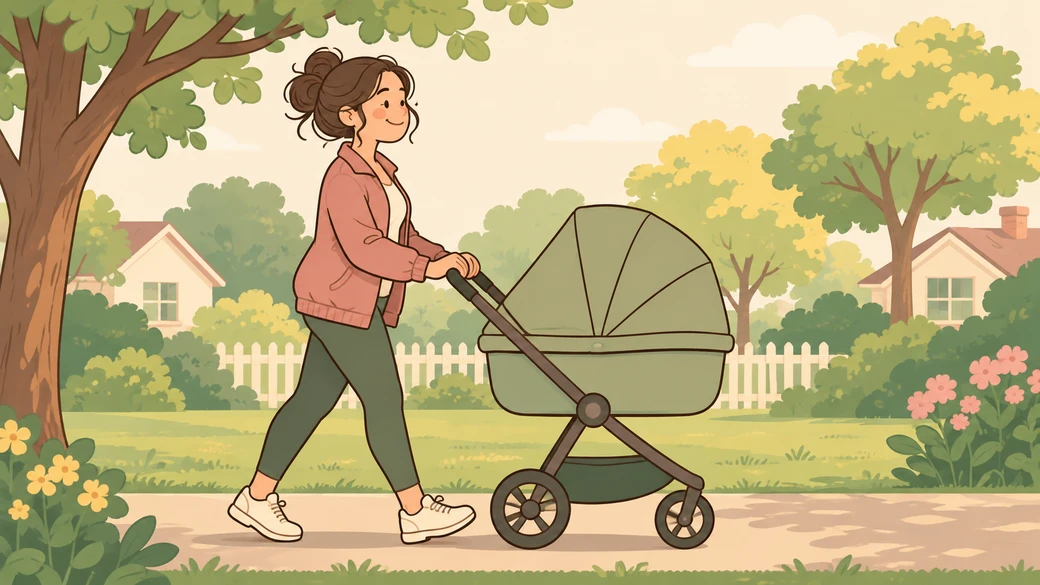
Pelvic floor exercises are the first step for almost everyone, and they can start soon after birth. They help with leaking pee, which is common after birth. Short walks are another gentle start, and pushing a stroller around the block counts. [5] [6] [2]
If you had a tear or stitches, follow the advice of your midwife or physiotherapist about what to avoid while you heal. After a third- or fourth-degree tear, the RCOG advises avoiding strenuous activity and heavy lifting for 4 to 6 weeks. [6]
Building back up
Increase your activity slowly. ACOG’s goal for adults after pregnancy is at least 150 minutes of moderate aerobic activity a week, such as brisk walking. You can reach it in short sessions spread across the week. [1]
Wait until after your 6-week postnatal check before high-impact exercise such as running, jumping or aerobics. MedlinePlus gives the same 6-week guide for jogging, dancing and lifting weights after a vaginal birth. Some people need longer, especially after a cesarean. [2] [4] [3]
After a cesarean
A cesarean is abdominal surgery. Gentle walking each day helps lower the risk of blood clots. Exercise, driving and lifting anything heavier than your baby may need to wait about 6 weeks. Ask your provider when to start, and start only when you feel able. Our guide to C-section recovery has more. [3] [1]
Exercise, breastfeeding and rest
If you’re breastfeeding, a supportive bra can make exercise more comfortable, and you may find it easier to feed before you work out. Drink when you’re thirsty. [1]
Sleep is short with a newborn, and recovery takes energy. There’s no deadline for getting back to how you were before. The NHS notes that regular activity can relax you and help you feel more energetic, and rest is part of recovery too. [2]
Why moving again helps
ACOG notes that exercise after pregnancy can strengthen your abdominal muscles, boost your energy, improve sleep, relieve stress, and may help prevent postpartum depression. You don’t need a gym or a plan to get those benefits. Walking counts. [1]
If you were active before or during pregnancy, you may be able to return to your usual activities more quickly, building up as your body allows. If you weren’t very active before, start with short walks and add a few minutes at a time. [1]
Easy ways to fit activity in
Walk with the stroller or a carrier. Do pelvic floor squeezes while you feed or wait for the kettle. Stretch on the floor while your baby has awake time on a play mat. Short sessions add up across the week. [1] [2]
If leaking, heaviness in your pelvis or pain makes exercise hard, mention it at your postnatal check. A physiotherapist can help you get back to the activities you enjoy. [5] [7]
When to stop and call your doctor or midwife
Stop and call your doctor or midwife if exercise brings on heavier bleeding, pain in your belly, pelvis or a wound, or leaking that isn’t getting better. Get urgent help for chest pain, trouble breathing, dizziness or fainting, or pain and swelling in one leg. [8] [5]
Keep reading
Join the BabyTides waitlist for updates about the app.
Join the waitlistSources
- ACOG: Exercise After Pregnancy
- NHS: Keeping fit and healthy with a baby
- NHS: Caesarean section – recovery
- MedlinePlus: Vaginal delivery – discharge
- NHS: Your body after the birth
- RCOG: Care of a third- or fourth-degree tear that occurred during childbirth
- NHS: Your 6-week postnatal check
- CDC: Urgent Maternal Warning Signs and Symptoms
Sources checked November 13, 2026.