BabyTides™
Join the waitlist
0–3 months · 2 min read
Tummy time: a gentle beginning
Short, supervised moments on the tummy, with simple ways to start and follow your newborn’s cues.
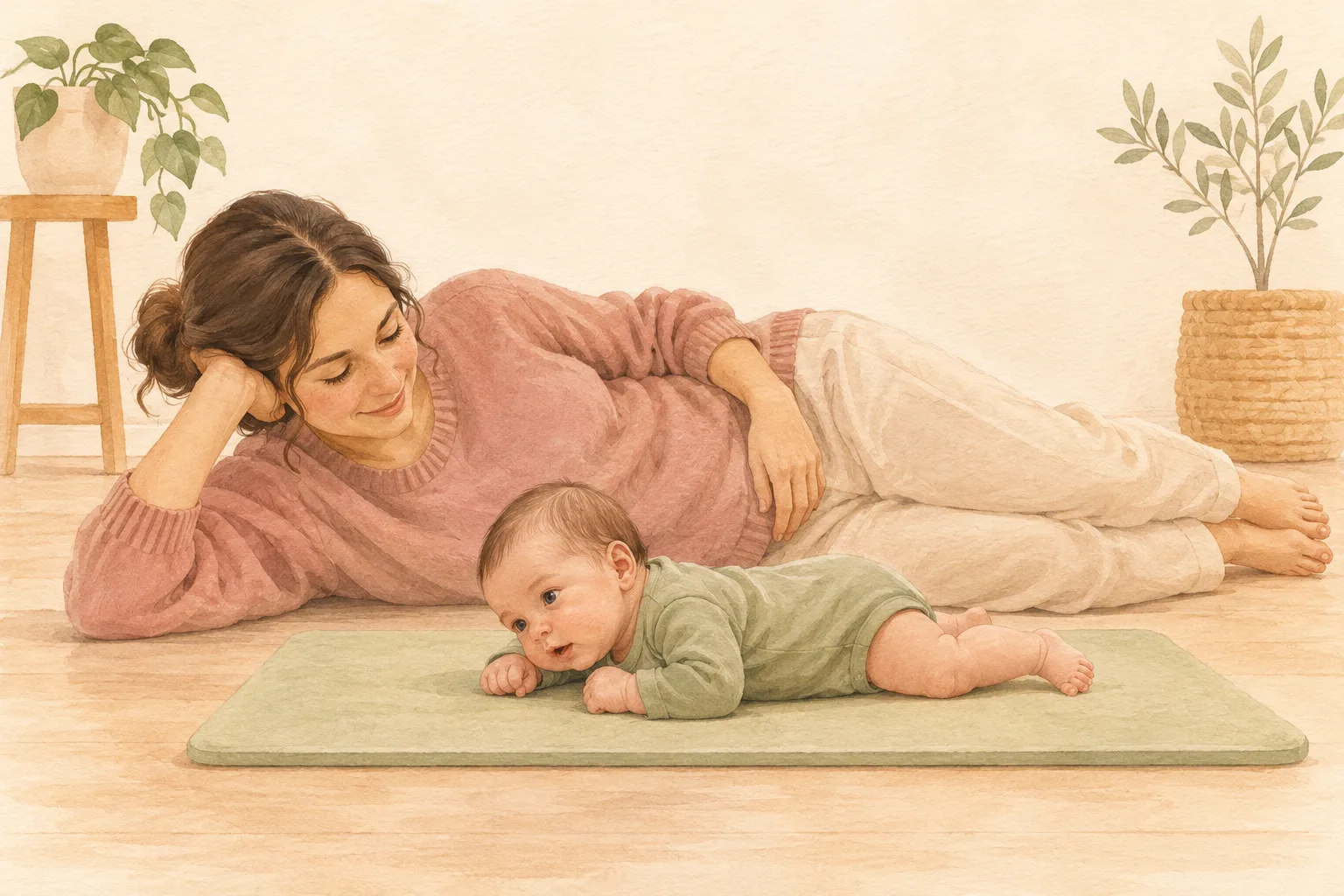
Tummy time is awake play, not a sleep position. You can begin with a small, comfortable moment together rather than a long session. The aim is an opportunity to move and look around, not to make your baby hold a pose.
Before you begin
A clear floor mat, or your chest while you are completely awake; no equipment is required.
Try it, step by step
- Choose a calm, alert moment and stay close enough to see your baby’s face and breathing.
- Place your baby on their tummy on a firm, clear floor surface. You can start on your chest while fully awake and unlikely to doze.
- Get down in front of your baby and speak softly. Let them make their own small attempts to lift or turn their head.
- Finish when your baby becomes uncomfortable or tired. Return to a comfortable position; if sleepy, use their safe sleep space, on their back.
How long?
AAP suggests starting with 3–5 minutes, 2–3 times daily. This is a starting point, not a fixed schedule for the whole 0–3-month period. End sooner if your baby is upset and gradually add comfortable awake play over the day. Ask your clinician for individual guidance if increasing the time is difficult.
When to skip or adapt
- Never use tummy time during sleep or when the supervising adult might fall asleep.
- Ask your clinician for an adapted position if your baby has a medical condition, was born early or has movement restrictions.
This list is not an individual medical assessment. Follow any restrictions given by your child’s care team.
What to notice
Look for comfort and engagement, not a high head lift. Pause for crying, tiredness or difficulty keeping the face clear. Persistent difficulty or a strong preference for one side is worth discussing with your clinician.
Stop if movement seems painful. Seek medical advice for loss of skills or persistent concerns. If your child has difficulty breathing, is difficult to wake or does not respond, call your local emergency number immediately.
Sources & limitations
Original editorial adaptation of the guidance below. These activities do not diagnose developmental delay or replace physiotherapy. The source-check dates below are not specialist-review dates for this article.
- AAP: Back to Sleep, Tummy to Play — source checked 2026-11-23
- NHS: Keeping your baby or toddler active — source checked 2026-11-23
- NHS: Urgent medical help for babies and young children — source checked 2026-11-23