 BabyTides™
Join the waitlist
Pregnancy · Weeks 34–40
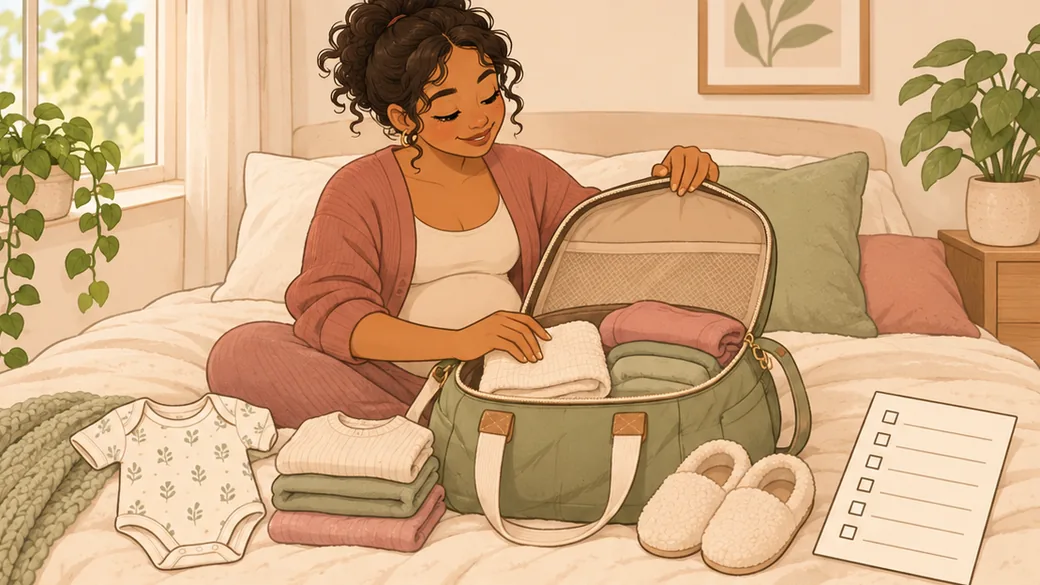
Hospital bag checklist: what to pack for you, your partner and your baby
A packed bag by the door is one less thing to think about when labor starts. Here's when to pack it and what to put in it, based on the NHS checklist, plus what the American Academy of Pediatrics (AAP) says about the car seat and the last few things to do before you take your baby home.
Quick answers
When should I pack my hospital bag?
The NHS suggests having it packed at least 3 weeks before your due date, because only about 1 in 20 babies arrive on their due date [1]. For a due date at 40 weeks, that means by around 37 weeks.
What's most important to pack?
The NHS list starts with your birth plan and hospital notes [1]. Comfortable clothes, maternity pads, snacks and drinks, a phone charger, and clothes and diapers for your baby make up most of the rest [1]. In the US, the AAP says all hospitals will check that you have a rear-facing car seat installed before you leave [3].
Do I need to bring diapers and baby clothes?
The NHS list includes diapers, wipes, bodysuits, sleepsuits and an outfit for going home [1]. Some hospitals provide diapers during your stay, so ask yours what they supply.
BabyTides app · coming to iPhone and Android
Get ready for the first weeks with your baby
BabyTides is a simple log for life with a newborn: feeds, sleep and diapers in a tap, and a weekly summary to look back on.

- Feeds
- Sleep
- Diapers
Want paper for now? Print our free newborn log, no sign-up needed.
Not in the App Store or Google Play yet. We’ll email you when it opens.
For you
From the NHS checklist [1]:
- Your birth plan and hospital notes
- Loose, comfortable clothes for labor, a robe, and slippers or flip-flops
- Nightwear that opens at the front or fits loosely, if you plan to breastfeed
- Three changes of comfortable clothes, socks, and 5 or 6 pairs of underwear (disposable ones can help)
- Two or three supportive bras, including nursing bras if you're breastfeeding, and breast pads
- Two packs of super-absorbent maternity pads
- A wash bag with toiletries, a hairbrush, a washcloth and lip balm
- An eye mask, towels, your own pillow, and a spare bag for laundry
- Healthy snacks, drinks and a water bottle (one with a straw can help)
- A small fan or water spray to cool down
- Any medicines you take
- Books, podcasts or music to help you relax and pass the time
- Your phone and charger, ideally with an extra-long cable or a battery pack
- Spare glasses or contact lenses, if you wear them
For your birth partner
The NHS suggests your birth partner packs [1]:
- A change of clothes
- A toothbrush, toothpaste and deodorant
- Their phone and charger, and a camera if they want one
- Snacks and drinks
- Swimwear, if they'll be getting in a birth pool
- Any medicines they take, and spare glasses or contact lenses
- Change for parking and vending machines
For your baby
The NHS list for your baby [1]:
- Bodysuits, undershirts and sleepsuits
- An outfit for going home
- A hat, scratch mittens, and socks or booties
- A snowsuit if it's cold (see the car seat note below)
- Diapers
- Cotton wool or wipes
- Muslin cloths
- A blanket or shawl
- A car seat for the trip home
The car seat
If you're going home by car, the car seat is the one item you can't leave until the last minute.
- The AAP recommends that all babies ride rear-facing, starting with their first ride home from the hospital [4].
- The AAP says to install the rear-facing car seat in the back of your vehicle before you go home, and that all US hospitals check that you have one [3].
- The AAP suggests working with a certified child passenger safety technician before your baby is born to make sure the seat is installed properly [5].
- For the ride home, the AAP says to dress your baby in thin, snug layers and put any coat or blanket over the harness straps, not under them [3]. Bulky clothing such as a snowsuit can compress in a crash, so it shouldn't go under the straps [4].
- The AAP says never to put a rear-facing seat in the front seat of a car with an active front passenger airbag [4].
Before you leave the hospital
The AAP suggests a few things to do before you go home with your baby [2]:
- Ask about your baby's first immunizations, which all newborns should start before leaving the hospital [2].
- Ask the nurses any questions you have about safe sleep for your baby [2].
- Have the car seat installed and ready [2].
- Book your baby's first well-child checkup [2].
Still waiting? Our guides to signs of labor and when to go in and your baby's movements cover when to call your doctor or midwife in the last weeks.
Getting ready for your baby
Your baby's first weeks, a little calmer
BabyTides is a simple log and guide for life with a newborn: feeds, sleep and diapers in a tap, and what's common at each age, from the AAP, CDC and NHS. It's coming to iPhone and Android. Join now and we'll email you when it opens.
Join the waitlistNot in the App Store or Google Play yet. Your due date is optional.
Sources
- NHS. Pack your bag for labour. Updated December 22, 2025.
- American Academy of Pediatrics, HealthyChildren.org. Bringing Baby Home: What to Do Before Leaving the Hospital.
- American Academy of Pediatrics, HealthyChildren.org. Bringing Baby Home. Updated August 14, 2023.
- American Academy of Pediatrics, HealthyChildren.org. Rear-Facing Car Seats for Infants & Toddlers.
- American Academy of Pediatrics, HealthyChildren.org. Car Seats: Information for Families.
Sources checked November 10, 2026.