BabyTides™
Join the waitlist
6–9 months · 2 min read
Discovering toys with two hands
A simple floor game for exploring, holding and moving safe toys from one hand to the other.

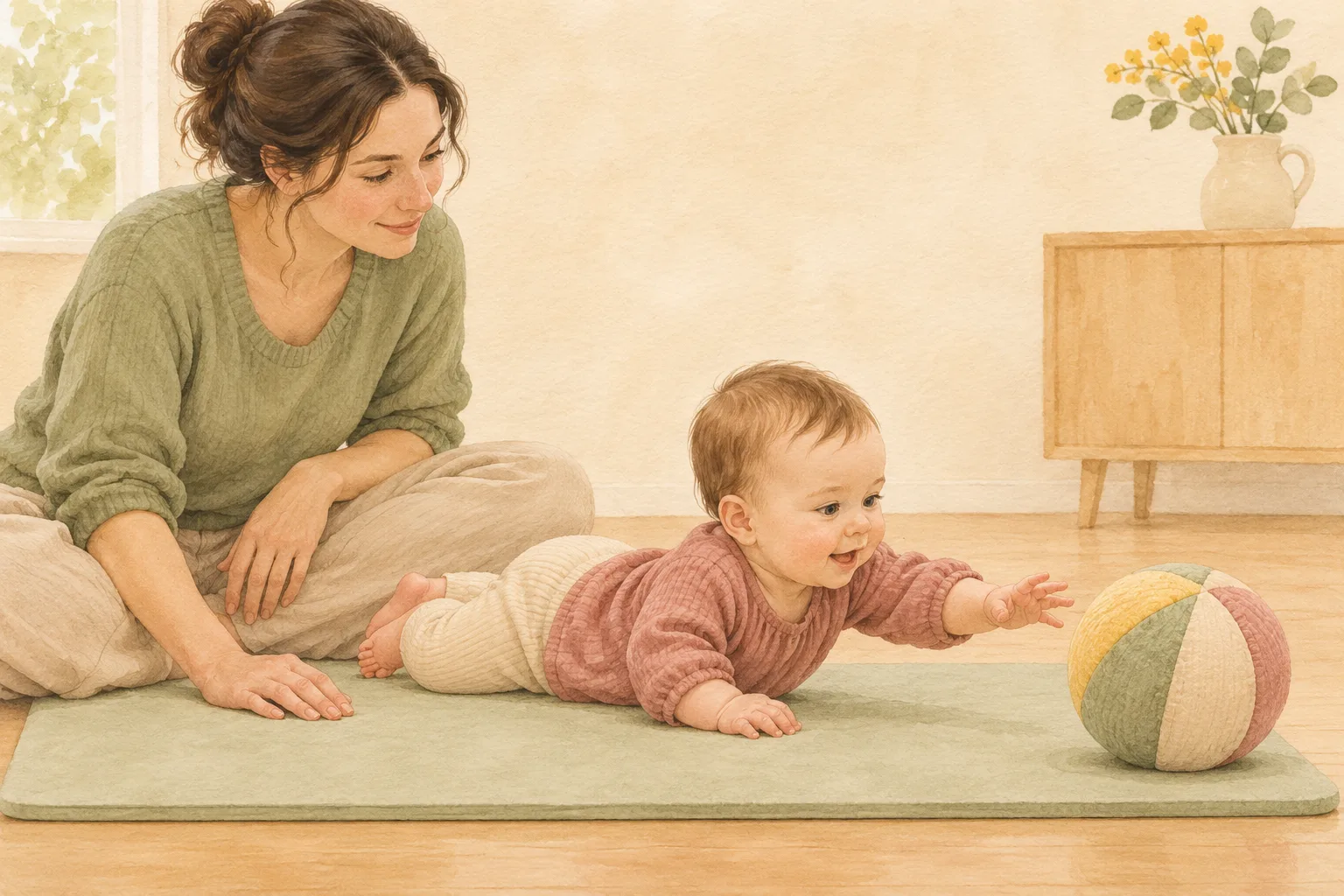
Play with an object can be a whole activity. You can share your baby’s curiosity without teaching a sequence. Choose a position they can manage comfortably and keep the toy easy to reach.
Before you begin
One or two large, light baby toys with no loose parts or sharp edges.
Try it, step by step
- Stay beside your awake baby on a firm, clear floor surface. If they do not sit comfortably on their own, play with them lying on their back instead; do not prop them between cushions.
- Offer one toy and wait. Let your baby hold it, turn it or bring their other hand towards it.
- Offer another safe object if they remain interested; do not remove the first to demand a hand change.
- Talk about what they are doing. End when they become tired, frustrated or distracted.
How long?
Follow a few moments of interest. Repeating the same exploration is welcome, but not required.
When to skip or adapt
- If your baby does not sit comfortably on their own, use back-lying floor play instead of propping them between cushions. Keep toys within easy reach.
- Avoid small objects, detachable batteries, magnets and toys unsuitable for mouthing.
This list is not an individual medical assessment. Follow any restrictions given by your child’s care team.
What to notice
Transferring an object may emerge during ordinary play. You do not need to guide the baby’s hands through it. Ask your pediatrician if there is persistent pain, unusual one-sided use or loss of skills.
Stop if movement seems painful. Seek medical advice for loss of skills or persistent concerns. If your child has difficulty breathing, is difficult to wake or does not respond, call your local emergency number immediately.
Sources & limitations
Original editorial adaptation of the guidance below. These activities do not diagnose developmental delay or replace physiotherapy. The source-check dates below are not specialist-review dates for this article.
- CDC: Milestones by 9 months — source checked 2026-11-23
- CDC: Milestones by 6 months — source checked 2026-11-23
- NHS: Urgent medical help for babies and young children — source checked 2026-11-23