BabyTides™
Join the waitlist
1–2 years · 2 min read
A playful carry-and-put-away game
Turn a familiar tidy-up moment into gentle movement for a toddler who already walks independently.
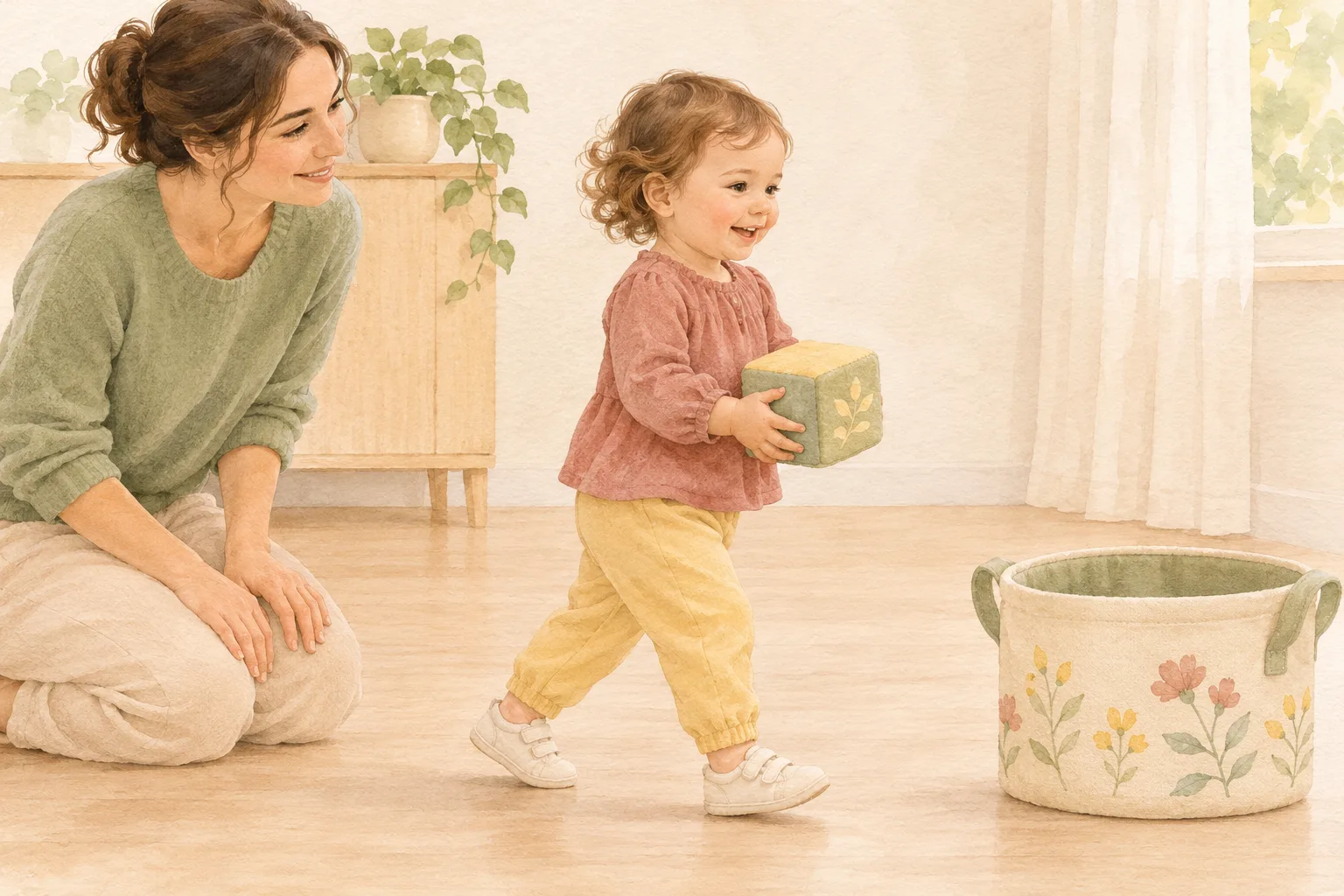
Everyday routines offer chances to move together. This game uses a short, familiar route and one light object. It is not a balance challenge, and a toddler does not need to complete a task to enjoy it.
Before you begin
A light toy or cloth, a low open basket and a clear, level route.
Try it, step by step
- Check that your child can already walk independently and that the route is free from clutter.
- Offer one light object that does not block their view. Show where the basket is.
- Walk alongside them at their pace. Let them put the object down or ask for help.
- Thank them for joining you, then decide together whether to try another object or finish.
How long?
One trip is a complete game. Avoid turning it into repeated laps or a timed task.
When to skip or adapt
- Use seated in-and-out play instead if your child is not walking independently.
- Avoid heavy loads, stairs, hot or breakable objects, and hard or pointed objects such as pencils that could injure a child if they fall with one in their mouth.
This list is not an individual medical assessment. Follow any restrictions given by your child’s care team.
What to notice
Watch for fatigue or a change in balance and keep the route easy. Stop play and seek urgent medical advice if your child suddenly stops using an arm or leg normally, or movement seems painful.
Stop if movement seems painful. Seek medical advice for loss of skills or persistent concerns. If your child has difficulty breathing, is difficult to wake or does not respond, call your local emergency number immediately.
Sources & limitations
Original editorial adaptation of the guidance below. These activities do not diagnose developmental delay or replace physiotherapy. The source-check dates below are not specialist-review dates for this article.
- CDC: Milestones by 2 years — source checked 2026-11-23
- CDC: Milestones by 18 months — source checked 2026-11-23
- NHS: Urgent medical help for babies and young children — source checked 2026-11-23