BabyTides™
Join the waitlist
1–2 years · 2 min read
Roll a ball together
An easy turn-taking game that works sitting down, with room to grow as your toddler gains confidence.

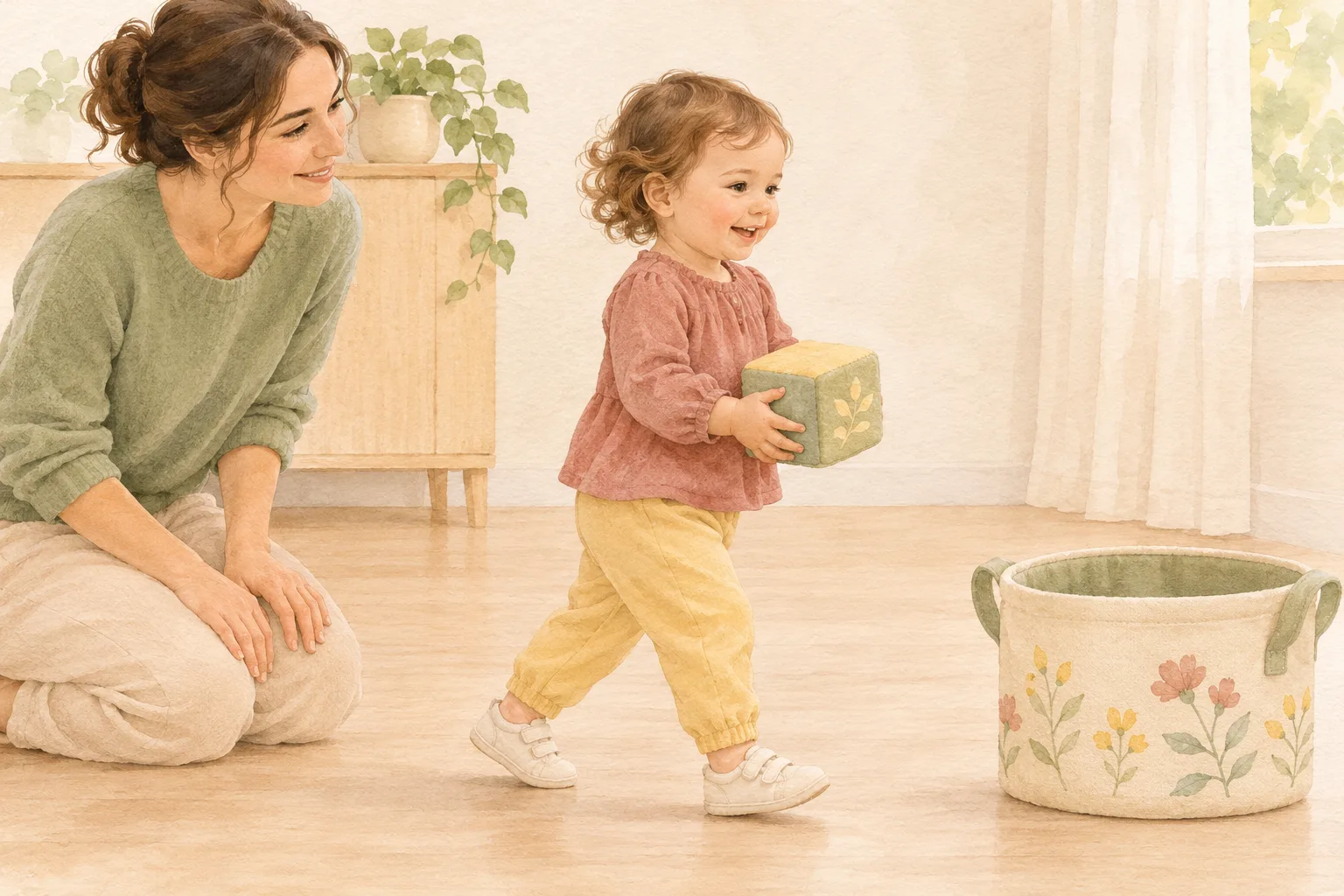
You do not need a child who walks confidently to enjoy a ball game. Start at floor level and let the ball connect your turns. Later, a toddler who is steady on their feet may want to try a gentle kick.
Before you begin
A large, soft, age-appropriate ball and a clear, level space.
Try it, step by step
- Sit facing your child at a comfortable distance, close enough for the ball to reach easily.
- Roll the ball slowly towards them. Wait for any response: touching, holding or pushing it back.
- Keep your next turn gentle. Bring the ball back if it travels too far.
- For a confident walker who is interested, place the ball still on the floor and show one gentle kick. Stay nearby; sitting play remains a good option.
How long?
Follow interest and energy. It is fine to stop after a couple of turns.
When to skip or adapt
- Avoid balloons, small balls, stairs and chasing a ball near roads or water.
- Skip the standing version if your child is not steady, is tired or has movement restrictions.
This list is not an individual medical assessment. Follow any restrictions given by your child’s care team.
What to notice
Missing the ball or keeping it is part of learning, not a mistake. Do not move your child’s leg for a kick. Choose the easier seated version whenever standing makes the game stressful.
Stop if movement seems painful. Seek medical advice for loss of skills or persistent concerns. If your child has difficulty breathing, is difficult to wake or does not respond, call your local emergency number immediately.
Sources & limitations
Original editorial adaptation of the guidance below. These activities do not diagnose developmental delay or replace physiotherapy. The source-check dates below are not specialist-review dates for this article.
- CDC: Milestones by 18 months — source checked 2026-11-23
- CDC: Milestones by 2 years — source checked 2026-11-23
- NHS: Urgent medical help for babies and young children — source checked 2026-11-23