 BabyTides™
Join the waitlist
Sleep · 3–6 months
The 4-month sleep regression: what's really changing
The "4-month sleep regression" is the popular name parents give to a stretch when a baby who had started sleeping in longer stretches wakes more often again. Here's what health organizations and sleep researchers describe changing in a baby's sleep at this age, what the evidence does and doesn't show, and what may help.
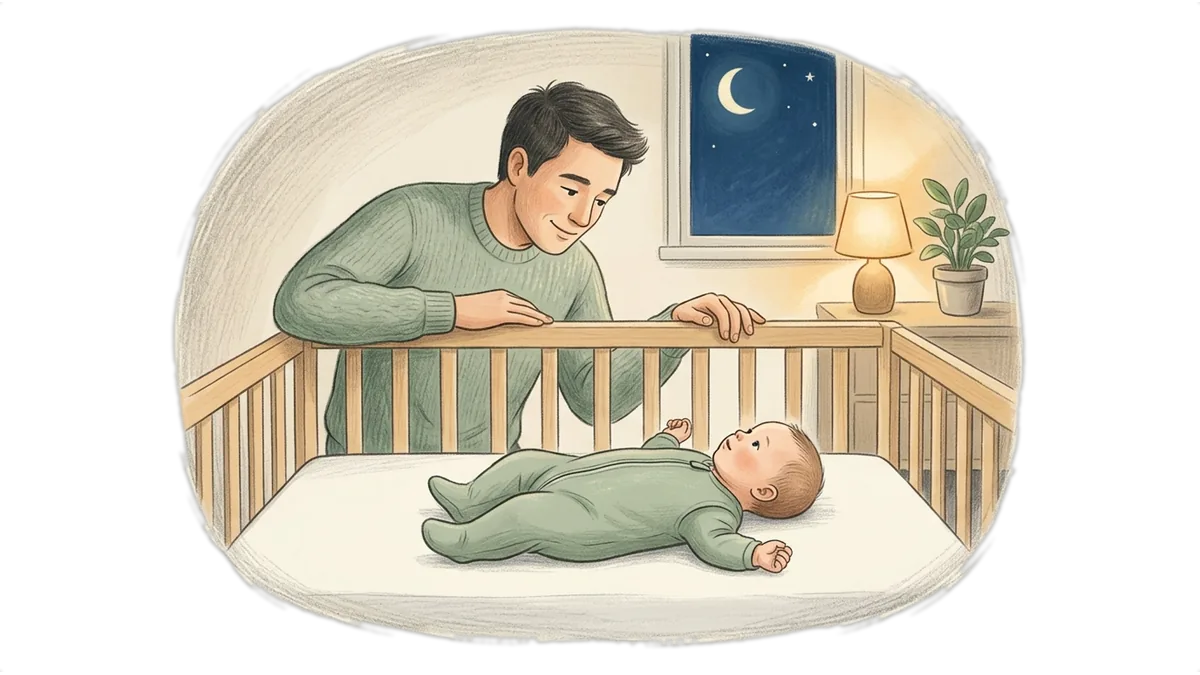
What people mean by a "sleep regression"
Parents use the phrase for a stretch of nights when a baby who seemed to be settling into longer sleep starts waking more often, or fights naps that used to be easy. It's an everyday phrase rather than a medical one: the AAP and NHS guidance on baby sleep we drew on for this article doesn't use it [1, 7, 8].
What that guidance does describe is sleep that keeps changing through the first year. In the NHS's words, your baby's sleep pattern will change as they grow, and it can feel as though every time you've settled into a routine, it changes again [8].
The word "regression" suggests going backward. The research below describes something closer to the opposite: around this age, a baby's sleep is maturing [3].
BabyTides app · coming to iPhone and Android
See your baby’s sleep, day by day
Log naps and nights in a tap. The weekly summary shows how much sleep there was and when, so changes are easier to see.

- Sleep log
- Notes
- Weekly summary
Want paper for now? Print our free newborn log, no sign-up needed.
Not in the App Store or Google Play yet. We’ll email you when it opens.
What changes in sleep in these months
Newborn sleep is built differently from an older child's. For newborns, sleep is split about equally between REM sleep, also called active sleep, and non-REM sleep, the deepest part of which is called quiet sleep, the AAP explains [11].
Over the next few months, the brain's sleep patterns develop quickly. A detailed review of how sleep specialists score infant sleep studies, published in the Journal of Clinical Sleep Medicine, describes these changes [3]:
- Sleep spindles, short bursts of brain activity that mark a stage of non-REM sleep, are typically present by 2 to 3 months [3].
- The slow waves of deep sleep can first be seen as early as 2 to 3 months [3].
- By 4 to 4.5 months, and sometimes as early as 2 to 3 months, a baby's non-REM sleep can usually be divided into the same three stages used for older children and adults [3].
The ages in that review are counted from a baby's due date ("post-term") [3].
The AAP describes the same shift in plainer terms: babies don't have regular sleep cycles until about 4 months of age [1]. Another AAP page puts it at about 6 months [2], so even the AAP's own pages give different ages. The AAP also notes that most young babies can sleep through just about anything, and that as your baby gets older, they will probably become a lighter sleeper [4].
Four months is also where the American Academy of Sleep Medicine starts its sleep recommendations. It advises 12 to 16 hours of sleep per 24 hours, including naps, for babies aged 4 to 12 months [5]. It makes no recommendation for younger babies, because the normal range of sleep at that age is so wide and there isn't enough evidence linking sleep amounts to health outcomes [5].
What the evidence does and doesn't show
We didn't find guidance from the AAP or NHS that names a "4-month" dip in sleep or says how long it lasts, so it's worth being clear about what's known.
In one long-term study, mothers of 118 babies answered sleep questionnaires at 3, 6, 9 and 12 months. Waking at night was common throughout the first year. On average, the number of wake-ups went down from 3 to 6 months and went up again at 9 months [6]. The study relied on mothers' questionnaire reports, which the author notes can't objectively confirm changes in sleep [6]. Averages like these also can't show what happens to one baby over a few weeks.
Sleep can also change for other everyday reasons. The NHS mentions growth spurts, teething, illness, hunger and being too hot or too cold among the things that can affect or disturb a baby's sleep [7].
Waking itself isn't a sign that something has gone wrong. The AAP says it's normal for a 6-month-old to wake during the night and go back to sleep after a few minutes [1].
What may help
The AAP has a few suggestions for babies 4 months and older [1]:
- Bed when drowsy. The AAP suggests putting babies to bed when they're drowsy, rather than waiting until they're asleep. If you hold or rock babies to sleep, it says, they may struggle to go back to sleep when they wake in the night [1].
- A pause before you go in. The AAP suggests not rushing in to soothe a crying baby, because babies need time to put themselves back to sleep and to learn to fall back asleep on their own [1]. It adds that you can, of course, go to your baby when they need a feed, a dirty diaper changed, or comfort because they're sick [1].
For babies of all ages, the AAP suggests trying not to stimulate or wake your baby when you feed or change them during the night [1].
The NHS says a simple, soothing bedtime routine may help a baby settle [7]. Its ideas include a bath, night clothes and a fresh diaper, a bedtime story, dimmed lights, a goodnight kiss and cuddle, and a lullaby [7]. It also advises being ready to change routines as your baby grows and enters different stages [7].
The NHS acknowledges that disturbed nights can be very hard to cope with [7]. It suggests sleeping when your baby sleeps, asking a partner to help, or, if you're on your own, asking a friend or relative to stay for a few days so you can get some sleep [7].
Safe sleep still comes first
The AAP's safe sleep recommendations apply to babies up to 1 year of age unless stated otherwise [9]. They include:
- placing babies on their back for every sleep until they're 1 year old [1]
- stopping swaddling when your baby looks like they're trying to roll over [9]
- not using a sleep surface that inclines more than 10 degrees [9]
- keeping soft objects and loose bedding away from your baby, because they can increase the risk of entrapment, suffocation or strangulation [9]
- not using weighted blankets, sleepers, swaddles or other weighted objects on or near your baby [9]
- sharing a room with your baby for at least the first 6 months [9]
If you bring your baby into your bed to feed or comfort them, the AAP says to place them back in their own sleep space before you go to sleep [9].
When to talk to your pediatrician
Get help right away
On its page about sleep apnea in children, the AAP says to call 911 or your local emergency number right away if your child's breath stops for more than 20 seconds, their skin color changes to pale, bluish or grayish, or there's a change in muscle tone, or they have a fever or other symptoms of illness [10].
The AAP advises letting your pediatrician know right away if your baby snores often, has problems breathing during the night, or seems sleepy during the day [10].
As the note at the top of this page says, if your baby seems unwell or you're worried, call your doctor.
For later age-related questions, see sleep changes beyond four months.
Writing it down helps
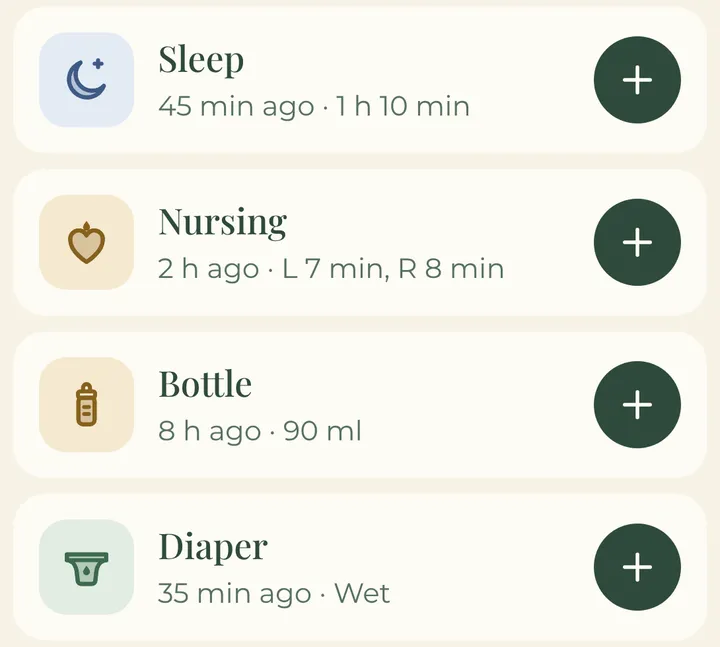
When nights suddenly get harder, it's hard to tell whether things are getting better or worse. A week or two of notes can show when your baby wakes, how long the longest stretch is, and how naps are going. That's what BabyTides will help with: sleep and feeds logged in a tap or two, and day and week reports with day and night sleep averages. It won't tell you why your baby is waking, but it gives you and your pediatrician a clearer picture.
For what's typical at each age, see our guide to baby sleep by age. If wake-ups are the main worry, why babies wake at night covers the common reasons, and when babies sleep through the night looks at the longer view.
Keep reading
 Sleep · 0–12 monthsWhen do babies start sleeping through the night?What sleeping through really means, what research shows in the first year, and what may help longer stretches.
 Sleep · 0–24 monthsWhy does my baby wake up so often at night?The usual reasons babies wake, from hunger to separation anxiety, what may help, and when to call your pediatrician.
 Sleep · 0–24 monthsHow much should my baby sleep?What's typical from the newborn weeks to age 2, why night waking is normal, and what may help.
BabyTides is coming to iPhone and Android. Join the waitlist and we'll email you when it opens.
Join the waitlistSources
- American Academy of Pediatrics, HealthyChildren.org. Getting Your Baby to Sleep. Updated June 4, 2024.
- American Academy of Pediatrics, HealthyChildren.org. Sleep (section overview). Accessed October 25, 2026.
- Grigg-Damberger M, Gozal D, Marcus CL, et al. The visual scoring of sleep and arousal in infants and children. Journal of Clinical Sleep Medicine. 2007;3(2):201–240.
- American Academy of Pediatrics, HealthyChildren.org. Waking Up Is (Sometimes) Hard to Do. Updated October 7, 2021.
- Paruthi S, Brooks LJ, D'Ambrosio C, et al. Recommended amount of sleep for pediatric populations: a consensus statement of the American Academy of Sleep Medicine. Journal of Clinical Sleep Medicine. 2016;12(6):785–786.
- Scher A. A longitudinal study of night waking in the first year. Child: Care, Health and Development. 1991;17(5):295–302.
- NHS. Helping your baby to sleep. Reviewed January 28, 2025.
- NHS Best Start in Life. Your baby's sleep patterns. Last modified March 27, 2026.
- American Academy of Pediatrics, HealthyChildren.org. How to Keep Your Sleeping Baby Safe: AAP Policy Explained. Updated September 11, 2026.
- American Academy of Pediatrics, HealthyChildren.org. Sleep Apnea in Children: Detection & Treatment. Updated April 24, 2024.
- American Academy of Pediatrics, HealthyChildren.org. Stages of Newborn Sleep. Updated September 18, 2013.
Sources checked October 25, 2026.