 BabyTides™
Join the waitlist
Sleep · 0–24 months
How much should my baby sleep?
Baby sleep changes a lot in the first two years, and the range of normal is wide. Here's what health organizations say is typical at each age, why waking at night is expected, what may help, and when to talk to your pediatrician.
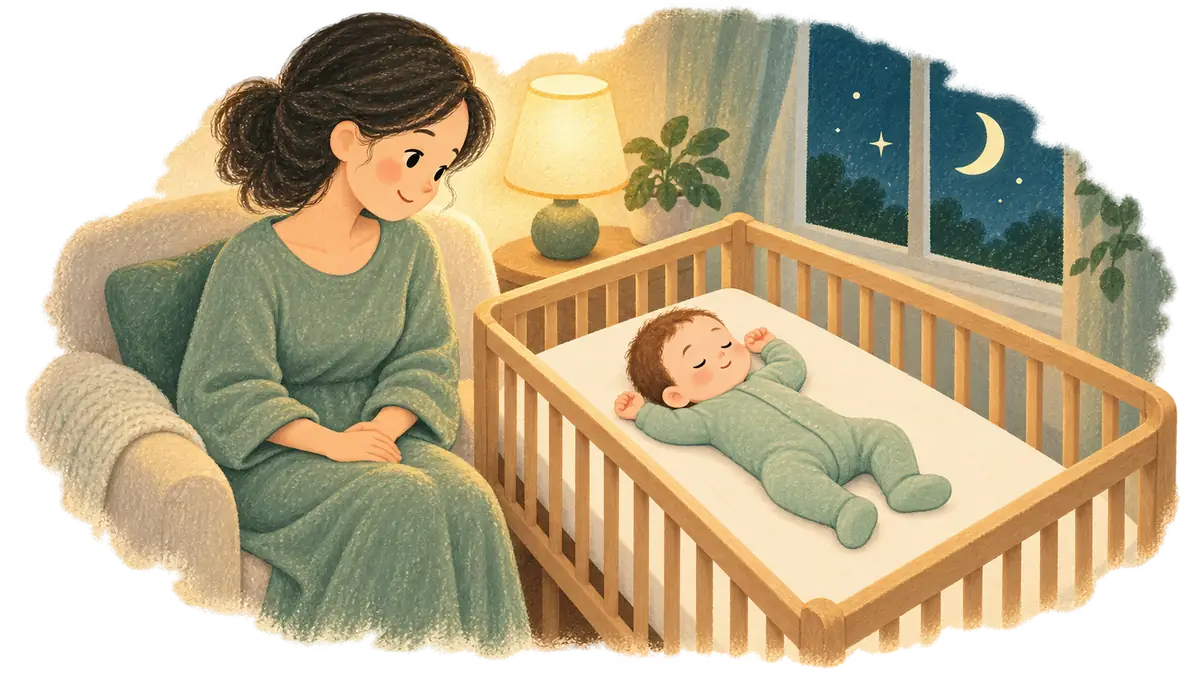
Quick answers
How much should a 1-month-old sleep?
At 1 month, a baby is still in the newborn stage. The AAP says newborns sleep about 16 to 17 hours a day, but often only 1 or 2 hours at a time [5]. The NHS describes a wider normal range, from around 8 to around 18 hours a day [3]. Waking at night to feed is expected [3, 4].
How long can a 6-week-old sleep at night?
Health organizations don't give a separate figure for 6 weeks. For newborns, the AAP describes sleep in stretches of 1 or 2 hours [5], and the NHS says sleeping through the night is very unlikely at this age, because small tummies need regular feeds [3]. Longer nights tend to come later: the NHS says some babies sleep for 5 to 8 hours or longer at night by 3 to 6 months, but not all [4].
Do 6-month-olds sleep through the night?
Some do, and many still wake. The NHS says that by around 6 months some babies may sleep for up to 12 hours at night [3]. The AAP notes that it's normal for a 6-month-old to wake during the night and fall back asleep after a few minutes [5]. More in our guide to when babies start sleeping through the night.
For month-by-month detail, see your baby's first month and second month.
BabyTides app · coming to iPhone and Android
See your baby’s sleep, day by day
Log naps and nights in a tap. The weekly summary shows how much sleep there was and when, so changes are easier to see.

- Sleep log
- Notes
- Weekly summary
Want paper for now? Print our free newborn log, no sign-up needed.
Not in the App Store or Google Play yet. We’ll email you when it opens.
Every baby sleeps differently
If your baby sleeps less, or in shorter bursts, than a friend's baby, that on its own usually isn't a sign that anything is wrong. Sleep experts don't even set a recommended number of hours for babies under 4 months, because sleep at that age varies so widely from baby to baby [2].
The numbers below are ranges for total sleep over 24 hours, naps included [1, 2]. Use them as a rough guide, not a target your baby has to hit.
| Age | Typical total sleep in 24 hours |
|---|---|
| Newborns | About 16 to 17 hours, according to the AAP [5]. The NHS describes a wider range, from around 8 to around 18 hours [3]. |
| 4 to 12 months | 12 to 16 hours, including naps [1, 2] |
| 1 to 2 years | 11 to 14 hours, including naps [1, 2]. The NHS gives around 12 to 15 hours after the first birthday [3]. |
The newborn weeks: short stretches, day and night
Most newborns are asleep more than they're awake, but often only for an hour or two at a time [5]. They wake at night because they need to feed, and their tummies are small, so sleeping through the night isn't expected yet [3, 4].
Babies gradually learn that night is for sleeping, and you can help [4]. During the day, open the curtains, play, and don't worry about everyday noise during naps. At night, keep the lights low and your voice quiet, and only change your baby if they need it [4].
3 to 6 months: longer stretches for some babies
Around this time, many babies need fewer night feeds and may start sleeping for longer at night [4]. The NHS says some babies sleep for 5 to 8 hours or more at night by now, but not all of them do [4]. Babies also start to develop more regular sleep cycles, at around 4 months [5].
From about 4 months, the AAP suggests putting your baby to bed when they're drowsy, rather than waiting until they're fully asleep [5]. It can take some practice, for you and for your baby.
6 to 12 months: still waking is still normal
Some babies in this age range sleep up to 12 hours at night [3], and for some, night feeds may no longer be needed [4]. But waking at night is still common. The AAP notes that it's normal for a 6-month-old to wake during the night and fall back asleep after a few minutes [5]. Teething pain and hunger can also disturb sleep at this age [3].
1 to 2 years: naps still count
For toddlers, the recommended totals still include daytime naps [1, 2]. Health organizations give slightly different ranges for this age, as the table shows. If your toddler's sleep looks very different from these ranges, or you're worried, bring it up at the next checkup.
Things that may help
No routine works for every family, and it's fine to try one change at a time.
- A short, predictable bedtime routine. A bath, fresh pajamas and diaper, a story, a lullaby and dim lights can help a baby settle [4].
- Light and play during the day, calm at night. This helps babies learn that night is for sleeping [4].
- Drowsy, not asleep, from about 4 months [5].
- Feed before bed, not in bed. The AAP advises against putting a baby to bed with a bottle of milk, formula or juice [1].
Whatever routine you choose, place your baby on their back for every sleep [5, 6], on a firm, flat surface, in their own sleep space in your room for at least the first 6 months [6]. The AAP's guide to safe sleep covers the details [6].
Look after your own sleep, too
Broken nights are one of the hardest parts of the first year. If exhaustion is making it hard to cope, or you feel low or anxious, tell your doctor. That's part of their job.
If evenings are the hardest time in your house, our guide to evening crying and colic may help.
Awake time matters too: see our guide to tummy time.
Feeds and sleep shape each other in the early weeks: see how much babies eat.
When to talk to your pediatrician
Get help right away
Call 911 or your local emergency number if your baby's breathing stops for more than 20 seconds, their skin turns pale, bluish or grayish, or there's a change in their muscle tone [7].
Let your pediatrician know if your child snores often, seems to have trouble breathing at night, or is very sleepy during the day [7]. Short pauses in breathing followed by a few quick breaths are common in young babies and are usually outgrown by 6 months [7], but it's always fine to ask. You can also bring up sleep at any checkup if you're worried or simply exhausted.
More on baby sleep
- When do babies start sleeping through the night?
- Why does my baby wake up so often at night?
- The 4-month sleep regression: what's really changing
- baby sleep regression ages and sleep changes
- Wake windows: what they are and what the evidence says
Writing it down helps
A few days of notes on when your baby slept, woke and fed tell you, and your pediatrician, far more than a memory of one long night. That's what BabyTides will help with: a one-handed log of sleep and feeds, and day and week reports that show how sleep is changing. It won't tell you how your baby should sleep, because every baby is different.
Keep reading
 Sleep · 3–6 monthsThe 4-month sleep regression: what's really changingHow baby sleep matures around 4 months, what the evidence does and doesn't show, and what may help.
 Sleep · 0–12 monthsWhen do babies start sleeping through the night?What sleeping through really means, what research shows in the first year, and what may help longer stretches.
 Sleep · 0–24 monthsWhy does my baby wake up so often at night?The usual reasons babies wake, from hunger to separation anxiety, what may help, and when to call your pediatrician.
BabyTides is coming to iPhone and Android. Join the waitlist and we'll email you when it opens.
Join the waitlistSources
- American Academy of Pediatrics, HealthyChildren.org. Healthy Sleep Habits: How Many Hours Does Your Child Need? Updated August 7, 2026.
- Paruthi S, Brooks LJ, D'Ambrosio C, et al. Recommended amount of sleep for pediatric populations: a consensus statement of the American Academy of Sleep Medicine. Journal of Clinical Sleep Medicine. 2016;12(6):785–786.
- NHS Best Start in Life. Your baby's sleep patterns. Last modified March 27, 2026.
- NHS. Helping your baby to sleep. Reviewed January 28, 2025.
- American Academy of Pediatrics, HealthyChildren.org. Getting Your Baby to Sleep. Updated June 4, 2024.
- American Academy of Pediatrics, HealthyChildren.org. How to Keep Your Sleeping Baby Safe: AAP Policy Explained. Updated September 11, 2026.
- American Academy of Pediatrics, HealthyChildren.org. Sleep Apnea in Children: Detection & Treatment. Updated April 24, 2024.
Sources checked October 15, 2026. Sources 3, 4 and 5 rechecked October 27, 2026.