 BabyTides™
Join the waitlist
Crying · 0–12 months
When the crying won't stop: coping and staying safe
Long stretches of crying can wear down even the calmest parent. This article sums up what the AAP, CDC and NHS say about taking a safe break, why shaking is never safe, where to find support and when to call a doctor. It reports the guidance and data of these health organizations and isn't personal advice.
Quick answers
Is it OK to walk away from a crying baby?
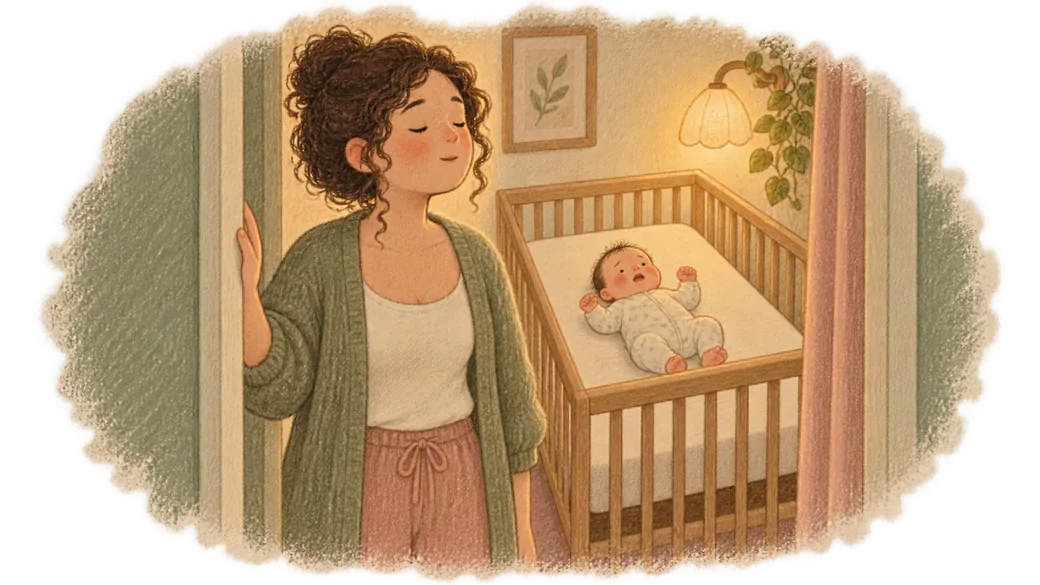
The NHS says that if you have no one to help and feel overwhelmed, you can put your baby somewhere safe, such as their crib or stroller, and go to another room for a set time before going back [1]. The CDC and AAP describe the same step [2, 3].
How long can I leave my baby to calm down?
The sources give different times. The NHS gives 10 minutes as an example [1], the AAP describes about 10 to 15 minutes [3], and the CDC suggests checking on your baby every 5 to 10 minutes [2].
What happens if a baby is shaken?
The CDC says shaking can cause abusive head trauma, a serious brain injury. As many as 1 in 4 babies who have it die, and nearly all babies who have it go on to have serious, long-term health effects [2].
BabyTides app · coming to iPhone and Android
Know when they last slept and fed
Log sleep, feeds and diapers in a tap. When the crying starts, BabyTides shows what to check first, from your own log.

- Sleep and feeds
- What to check
- Weekly summary
Want paper for now? Print our free newborn log, no sign-up needed.
Not in the App Store or Google Play yet. We’ll email you when it opens.
Why long crying can feel so hard
The CDC describes crying, including long periods when a baby can't be comforted, as normal infant behavior that is most intense in the first few months and gets better with age [2]. The AAP says newborns typically cry 1 to 4 hours a day, often without any obvious cause [4]. According to the NHS, crying tends to increase from around 2 weeks and ease at around 3 months [1].
The AAP notes that crying can be hard to handle, especially when parents are physically tired and mentally worn out, and that it doesn't mean a baby dislikes the people caring for them [3]. It also says feeling upset, frustrated or even angry is normal, and that what matters most is keeping your behavior under control [3, 5].
The CDC lists soothing ideas such as swaddling, skin-to-skin holding, a pacifier, rocking, singing or talking softly, and a walk in the stroller or a car ride [2]. Our guide to why babies cry covers the usual reasons to check.
Taking a safe break
All three organizations describe putting a crying baby down safely and stepping away when you feel your frustration rising. Their steps differ a little.
The AAP suggests taking a deep breath and counting to 10, then placing your baby in a crib or playpen that has no blankets or stuffed toys in it and leaving the room for about 10 to 15 minutes [3, 5]. It suggests using that time to calm down, for example by listening to music, calling a friend or relative, or doing a simple chore, and checking on your baby without picking them up until you feel calmer [3, 5].
The CDC says to focus on calming yourself, put your baby in a safe place, walk away and check on them every 5 to 10 minutes [2].
The NHS describes putting your baby in their crib or stroller, going to another room for a set time, for example 10 minutes, and then going back [1].
The CDC also says that if your baby won't stop crying, check for signs of illness and call a doctor if you think your baby is sick [2]. The AAP suggests calling your child's doctor too, because there may be a medical reason for the crying [3, 5].
Never shake a baby
The AAP says it is never safe to shake, throw, hit, slam or jerk a child [3, 5]. The NHS says shaking a baby can cause brain damage, however frustrated you feel [1].
The CDC explains that abusive head trauma, which includes shaken baby syndrome, often happens when a caregiver becomes angry or frustrated because a child is crying [2]. According to the CDC, babies younger than 1 year are at the greatest risk, and in the United States abusive head trauma is one of the leading causes of death from child abuse among children younger than 5, and accounts for about a third of child maltreatment deaths [2].
Everyone who cares for your baby
The AAP suggests sharing its information on crying with anyone who cares for your baby, including a spouse, partner or babysitter [4]. It says everyone who cares for a child, including partners, grandparents, older siblings and child care providers, should know the dangers of shaking or striking a baby's head [3]. It also suggests talking with caregivers about crying and frustration, and watching how they calm a crying baby [3].
The CDC advises never leaving a baby alone with a person who gets irritated easily, has a temper or has a history of violence [2]. For friends and family, the CDC suggests offering parents a break when needed and being sensitive and supportive when a baby is crying [2].
Support for you
The CDC suggests asking a friend, relative, neighbor, parent helpline or your child's healthcare provider for help [2]. The AAP says that if you feel you can't handle it, you can set your baby down in a safe place and get help from a family member or friend; this gives you needed relief, and a new face can sometimes calm the baby [4].
In the UK, the NHS suggests talking to a friend, your health visitor or your GP, and lists Cry-sis, a free helpline on 0800 448 0737, open 9am to 10pm every day [1]. In the US, the AAP lists the Postpartum Support International help line, 1-800-944-4773, in English and Spanish, which refers callers to local resources [6].
The NHS says the baby blues usually pass within 2 weeks of the birth, and that if low mood lasts longer, gets worse or makes it hard to cope, you should get help [7]. It says postnatal depression can start up to a year after the birth, that partners can also be affected, and that symptoms include irritability, low mood and feeling like a bad parent [7]. The NHS suggests speaking to your GP, midwife or health visitor even if you have only some symptoms [7]. The AAP says a history of depression before the birth may raise the risk of postpartum depression, and suggests talking with your provider early [6].
What studies of parent education found
One parent education program about crying that has been tested in trials is the Period of PURPLE Crying, a program run by another organization.
A 2009 randomized trial in the CMAJ included 1,279 mothers in Vancouver, Canada [8]. Mothers who got the materials scored higher on crying knowledge and reported walking away during unsoothable crying more often; shaking knowledge did not differ between groups [8]. The authors said their study was not designed or large enough to show whether the materials reduce shaken baby syndrome. They also noted that only mothers took part, that results relied on mothers' own reports, and that it is unclear whether the findings apply to other groups [8].
When to call a doctor or emergency services
The NHS says to trust your instincts, because you know what is different or worrying behavior in your baby [1].
The sources say to contact your pediatrician (NHS: your GP or NHS 111) if your baby:
- seems unwell, for example has a high temperature or doesn't want to feed [1]
- can't be soothed and has a rectal temperature of 100.4°F (38°C) or higher [4]
- is younger than 3 months and has a temperature of 100.4°F (38°C) or higher. See fever in babies for when to call at each age.
- keeps crying and you think they may be sick [2]
The NHS says to call 999 and ask for an ambulance (in the US, 911; elsewhere, your local emergency number) if your baby:
- has a seizure [1]
- has blue, gray, pale or blotchy skin, lips or tongue (on brown or black skin, check the palms and soles, where this can be easier to see) [1]
- is unresponsive, floppy or harder to wake than usual [1]
- has trouble breathing (you may hear grunting or see their stomach sucking in under the ribcage), is breathless or is breathing very fast [1]
- is vomiting forcefully and often (projectile vomiting) [1]
- has a high or low temperature [1]
- has a rash that doesn't fade when pressed [1]
- hasn't had a wet diaper in the past 8 hours [1]
BabyTides is being built to help with the everyday logging: feeds, sleep and diapers in a tap, plus a calm checklist of common reasons to check when your baby is crying. It can't tell you why your baby is crying, and it doesn't replace a call to your doctor or a support line.
For an overview of baby crying, with links to all our guides on it, see Baby crying: what's normal, what helps and when to call.
Keep reading
 Crying · 0–4 monthsWhy does my baby cry every evening?What's typical, what doctors mean by colic, what may help, and when to call your pediatrician.
 Crying · 0–24 monthsAre the Wonder Weeks real? What the research saysWhere the fussy-week calendar comes from, what later studies found, and what the AAP and NHS say.
 Crying · 0–4 monthsCrying in the first weeks: the normal crying curveHow much young babies cry, what studies found about the 6-week peak, and when crying is a reason to call.
BabyTides is coming to iPhone and Android. Join the waitlist and we'll email you when it opens.
Join the waitlistSources
- NHS. Soothing a crying baby. Reviewed April 22, 2026.
- Centers for Disease Control and Prevention. About Abusive Head Trauma. May 16, 2024.
- American Academy of Pediatrics, HealthyChildren.org. Shaken Baby Syndrome: Protect Your Infant from Abusive Head Trauma. Updated February 24, 2025.
- American Academy of Pediatrics, HealthyChildren.org. Responding to Your Baby's Cries. Updated February 20, 2025.
- American Academy of Pediatrics, HealthyChildren.org. How to Calm a Fussy Baby: Tips for Parents & Caregivers. Updated March 21, 2022.
- American Academy of Pediatrics, HealthyChildren.org. How to Cope With Crying & Caring for a New Baby. Updated July 2, 2024.
- NHS. Postnatal depression. Reviewed March 18, 2026.
- Barr RG, Barr M, Fujiwara T, et al. Do educational materials change knowledge and behaviour about crying and shaken baby syndrome? A randomized controlled trial. CMAJ. 2009;180(7):727–733.
- Health Resources and Services Administration (HRSA). National Maternal Mental Health Hotline.
- 988 Suicide & Crisis Lifeline. 988lifeline.org.
- Samaritans. Contact a Samaritan.
Sources checked October 29, 2026.